Oasis Under Tension: Historical Transformation and Environmental Change in a Protected Wetland of Western Argentina since the 20th Century
DOI:
https://doi.org/10.32991/2237-2717.2026v16i3.p426-460Keywords:
environmental flows, environmental memory, historical transformation, water balance, wetlandsAbstract
This research analyzes how historical transformations in the society–water relationship contributed to the environmental degradation of the wetland system of the Ramsar site Guanacache, Desaguadero, and Bebedero Lagoons, located in the arid center-west of Argentina, with particular emphasis from the 20th century to the present. Based on the study of the regional water balance, environmental flows, and climate change scenarios, the research examines how the expansion of irrigated oases and the territorial reorganization of water resources progressively altered the hydrosocial equilibrium of the system. Likewise, the historical context and the territorial organization linked to the balance that sustained the lacustrine system were analyzed, together with the dynamics of water use, considering both natural inputs and extractions derived from human activities. The results show that water overexploitation, combined with climate variability, compromises the sustainability of the system and generates increasing imbalances in the regional water balance, projecting scenarios of greater water stress. Additionally, the study incorporated the perspective of the Brisbane Declaration on Environmental Flows (2018) and the warnings presented in the IPCC Sixth Assessment Report (2021), both of which emphasize the need to preserve these flows in order to maintain the ecological functionality and ecosystem services of wetlands. The combined analysis reveals that the oasis, historically shaped by the interaction between society and water, is currently facing a critical situation in which agricultural, urban, and industrial demand exceeds natural supply, while projected reductions in water availability increase the system’s vulnerability. The study highlights the importance of recognizing wetlands as spaces of environmental memory and as laboratories for understanding long-term transformations in the society–water relationship, while underscoring the urgency of implementing integrated water management and climate adaptation policies.
References
Abraham, Rosa y Vitarelli, Marcelo “Las lagunas de Guanacache como espacio de recuperación. Un caso de estudio para la enseñanza del manejo integral de cuencas”. (2014). Actas Congreso Internacional de Geografía. Págs. 19-31.
Albiol, Claudia. “Análisis de las precipitaciones de Mendoza entre 1970 y 2010: variabilidad, tendencia y comportamiento cíclico”, En X Jornadas Nacionales de Geografía Física, Malargüe. Mendoza: (2014).
Albiol, Claudia. “Aplicación de criterios para la identificación de precipitaciones extremas en los oasis mendocinos, 1970–2010”, Vientos del Norte 6, no. 2, (2018). https://editorial.unca.edu.ar/Publicacione%20on%20line/CD%20VIENTOS%202017/PDF/N6%20Vol%20II/Albiol.pdf
Arias, Paola, Nicolas Bellouin, y otros. “Technical Summary”, En Climate Change 2021: The Physical Science Basis. Contribution of Working Group I to the Sixth Assessment Report of the Intergovernmental Panel on Climate Change. Cambridge University Press, 33–144, (2021). https://doi.org/10.1017/9781009157896.002
Arthington, Angela, Amar Bhaduri, Stuart Bunn, y otros. “The Brisbane Declaration and Global Action Agenda on Environmental Flows”, Frontiers in Environmental Science 6: 45, (2018). https://doi.org/10.3389/fenvs.2018.00045
Arthington, Angela. “Environmental Flow Concepts and Holistic Applications in River Basin Governance”, Ecology, Economy and Society – the INSEE Journal 1, no. 2, 73–76, (2018). https://doi.org/10.37773/ees.v1i2.37
Astelarra, Sofía. “La memoria del agua: el agua es río y el río es memoria”. Estudios del Hábitat. Vol. 16 (2). (2018). https://ri.conicet.gov.ar/handle/11336/103775
Bastidas, Luis, Alberto Vich, y Ángela Henao. “Hydrological alterations in semi-arid river systems: an exploratory approach to natural and anthropogenic drivers”, Investigaciones Geográficas, Num. 116, (2025). https://doi.org/10.14350/rig.60952
Bastidas, Luis. “Caudal Ambiental en el sitio Ramsar Lagunas de Guanacache, Desaguadero y del Bebedero, Argentina”, Tesis doctoral, Universidad Nacional del Sur, (2023). https://repositoriodigital.uns.edu.ar/handle/123456789/6415
Bruniard, Enrique. “La diagonal árida argentina: un límite climático real”, Revista Geográfica 95: 5-20, (1982).
Capitanelli, Ricardo. “Climatología de Mendoza”, Boletín de Estudios Geográficos 54–57, vol. Chapeaurouge, C. (1912). Plano catastral de la Provincia de Mendoza. Dirección técnica del Ing. Roberto Guevara. Cartografía Histórica del Instituto Geográfico Nacional (IGN), Argentina. https://www.ign.gob.ar/cartografia-historica/XIV, (1967).
Chiavazza, Horacio y María del Rosario Prieto. “El río Desaguadero: corredor cultural en la historia de Cuyo”. Capítulo 5, en: Restauración de un sistema ecológico compartido. Estudio ambiental del sitio Ramsar Lagunas de Guanacache, Desaguadero y del Bebedero. (2015): Editorial Dunken. ISBN: 978-987-02-7850-4.
Chiavazza, Horacio, y María del Rosario Prieto. “Estudios arqueológicos en el Río Desaguadero”, Runa v29, (2008).
Consejo Nacional de Coordinación de Políticas Sociales, Presidencia de la Nación. “Qué son los ODS”. Buenos Aires: Argentina.gob.ar, (2022). https://www.argentina.gob.ar/politicassociales/ods/institucional/queson
Consejo Nacional de Coordinación de Políticas Sociales, Presidencia de la Nación. “Los 17 Objetivos de Desarrollo Sostenible”. Buenos Aires: Argentina.gob.ar, (2022). https://www.argentina.gob.ar/politicassociales/ods/institucional/17objetivos
Departamento General de Irrigación, DGI. “Balances Hídricos de las Cuencas de la Provincia de Mendoza”. Mendoza: Gobierno de la Provincia de Mendoza, (2016). https://www.mendoza.gov.ar/economia/wp-content/uploads/sites/44/2016/09/PINA-Balances-H%C3%ADdricos-de-las-Cuencas-de-la-Provincia-de-Mendoza.pdf
Dirección Provincial de Vialidad de Mendoza (1947). Plano de la provincia de Mendoza. Instituto Geográfico Nacional (IGN), Cartografía Histórica. https://www.ign.gob.ar/cartografia-historica/
Food and Agriculture Organization of the United Nations (FAO). “UN-Water Analytical Brief: Water-use Efficiency”. Naciones Unidas, (2021). https://www.unwater.org/publications/un-water-analytical-brief-water-use-efficiency/
França, Ana. y Cerdá, Juan. “Las Transformaciones de los Espacios Rurales Argentinos: Paisajes Imaginados y Cambios Socio Ambientales (1880-1930)”. HALAC – Historia Ambiental, Latinoamericana y Caribeña. (2022): v.12 n.2. https://doi.org/10.32991/2237-2717.2022v12i2.p20-54
Gálvez, Juan. “Cartilla técnica: balance hídrico superficial”. Lima: Sociedad Geográfica de Lima – Fondo Peruano para el Agua, (2011). https://www.gwp.org/globalassets/global/gwp-sam_files/publicaciones/varios/balance_hidrico.pdf
Giménez, Gilberto. “Estudios sobre la cultura y las identidades sociales”. Colección Intersecciones, no. 18. Ciudad de México: Consejo Nacional para la Cultura y las Artes, (2007).
Gobierno de la Provincia de Mendoza. “Lagunas de Guanacache: valores hidrológicos, sociales y culturales”. Mendoza: Aquabook, (2016). https://aquabook.agua.gob.ar/456_0
Gobierno de San Juan. “Estrategia Provincial para el Sector Agroalimentario 2017–2026”. San Juan, (2017). https://www.argentina.gob.ar/sites/default/files/2023/05/san_juan_2017_con_actualizacion_2022.pdf
Gutiérrez, José Manuel, Richard G. y otros. “Atlas”, En Climate Change 2021: The Physical Science Basis. Contribution of Working Group I to the Sixth Assessment Report of the Intergovernmental Panel on Climate Change. Cambridge University Press, (2021). Interactive Atlas. http://interactive-atlas.ipcc.ch/
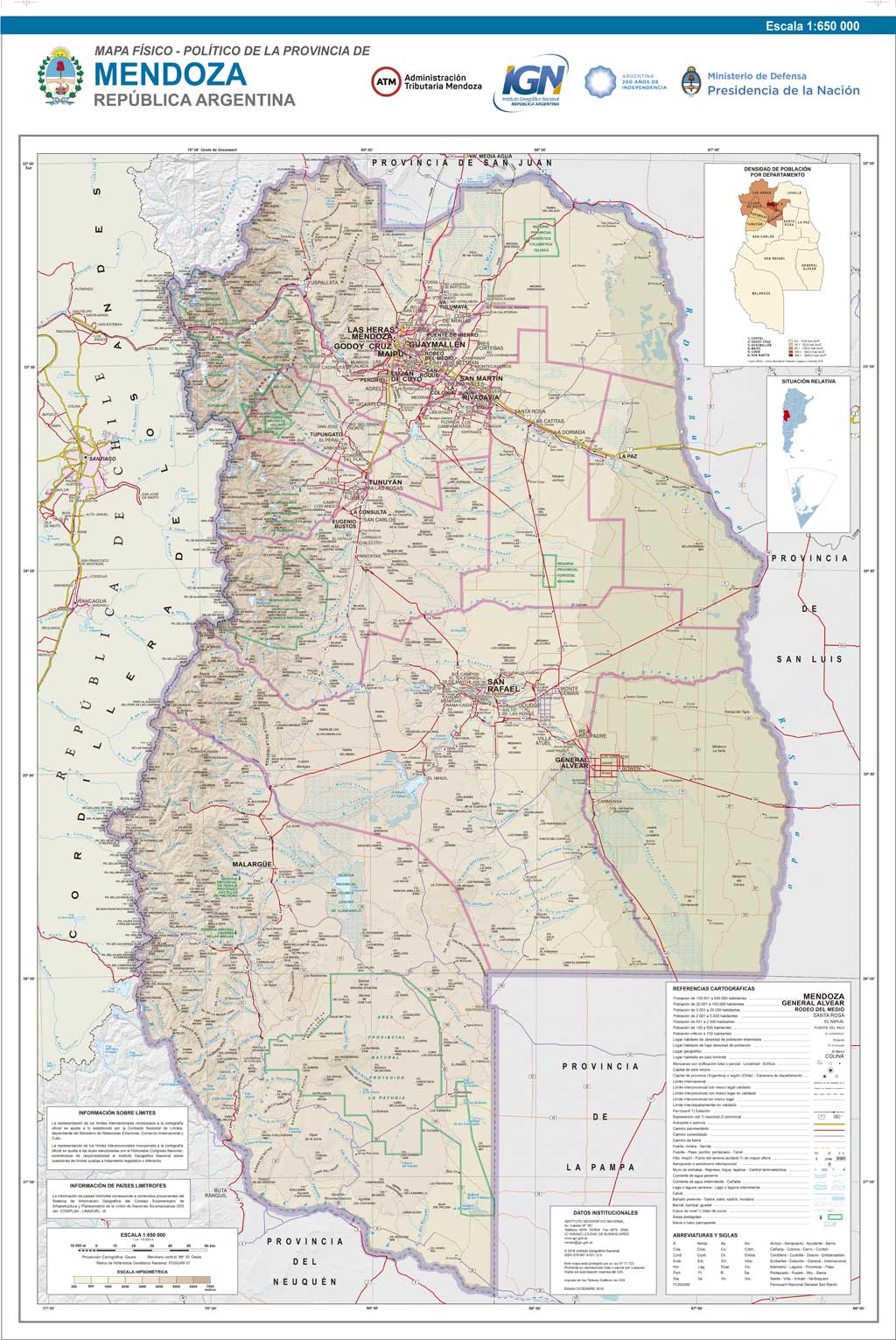
Instituto Geográfico Nacional (IGN). “Mapa Físico–Político de la Provincia de Mendoza. Buenos Aires”, (2016). https://www.ign.gob.ar/gallery-app/provincias/medium/mendoza_linea.jpg
Intergovernmental Panel on Climate Change (IPCC). “Climate Change 2021: The Physical Science Basis”. Contribution of Working Group I to the Sixth Assessment Report of the Intergovernmental Panel on Climate Change. Cambridge: Cambridge University Press, (2021).
Intergovernmental Panel on Climate Change (IPCC). “Regional Fact Sheet – Central and South America”, Sixth Assessment Report. Working Group I – The Physical Science Basis. Ginebra: IPCC, (2021). https://www.ipcc.ch/report/ar6/wg1/downloads/factsheets/IPCC_AR6_WGI_Regional_Fact_Sheet_Central_and_South_America.pdf
Intergovernmental Panel on Climate Change (IPCC). “Summary for Policymakers”, En Climate Change 2021: The Physical Science Basis. Contribution of Working Group I to the Sixth Assessment Report of the Intergovernmental Panel on Climate Change. Cambridge University Press, (2021). https://www.ipcc.ch/report/ar6/wg1/downloads/report/IPCC_AR6_WGI_SPM.pdf
Iturbide, Marta, Javier Fernández, y otros. “Repository Supporting the Implementation of FAIR Principles in the IPCC-WG1 Atlas”, Zenodo, (2021). https://doi.org/10.5281/zenodo.3691645. https://github.com/IPCC-WG1/Atlas
Lauro, Carolina. “Estudio del comportamiento del régimen fluvial de las cuencas del oeste argentino y su vinculación con el cambio climático”, Tesis doctoral, Universidad Nacional de Rosario, Facultad de Ciencias Exactas, Ingeniería y Agrimensura, (2016).
Legislatura de Mendoza. “Balance Hídrico del Río Mendoza: Por Ley piden que se actualice el documento técnico”, Mendoza, (2021). https://www.legislaturamendoza.gov.ar/balance-hidrico-del-rio-mendoza-por-ley-piden-que-se-actualice-el-documento-tecnico/
Llop, Armando, Graciela Fasciolo, Alicia Duek, Eduardo Comellas, y Mauricio Bucceri. “El balance hídrico en las cuencas de Mendoza: aportes para su medición”, Resultados de las Investigaciones – Proyección 8 (2013): 48–67. https://bdigital.uncuyo.edu.ar/objetos_digitales/12801/04llop-proyeccion14.pdf
Manzur, Gregorio. “Guanacache, las aguas de la sed”. Resonancias. Edición 157. ISSN 1961-974X (2007). https://www.resonancias.org/content/665/guanacache-las-aguas-de-la-sed-introduccion-por-gregorio-manzur
Minervini, Mariana y López, María. “Lagunas del desierto: el valor de la naturaleza en la identidad de su gente”. Administración de Parques Nacionales de Córdoba (Argentina). Primera Edición, (2012). https://sib.gob.ar/archivos/Manual_Lagunas_del_Desierto.pdf
Ministerio de Ambiente y Desarrollo Sostenible. “Lagunas de Guanacache, Desaguadero y Del Bebedero (Mendoza, San Juan, San Luis y APN)”, Gobierno de la República Argentina (2022): https://www.argentina.gob.ar/ambiente/agua/humedales/sitiosramsar/guanache-desaguadero-delbebedero
Moreiras, Stella, y Susana Devincenzi. “Geología del área del río Desaguadero”, En Restauración de un sistema ecológico compartido. Estudio Ambiental del sitio Ramsar Lagunas de Guanacache, Desaguadero y del Bebedero, cap. 1. Buenos Aires: Editorial Dunken, Universidad de Congreso, (2015). https://www.ucongreso.edu.ar/wp-content/uploads/2015/08/Tapa-y-contratapa-libro-Guanacache.pdf
O’Donell, Erin, Avril Horne, Lee Godden, y Brian Head. “Cry Me a River: Building Trust and Maintaining Legitimacy in Environmental Flows”, Australasian Journal of Water Resources, (2019). https://doi.org/10.1080/13241583.2019.1586058
Office for the Coordination of Humanitarian Affairs, OCHA. “Sequía castiga a comunidades y agricultores de los Andes argentinos”. (2021). https://reliefweb.int/report/argentina/sequ-castiga-comunidades-y-agricultores-de-los-andes-argentinos
Organización de las Naciones Unidas (ONU). “Transformar nuestro mundo: la Agenda 2030 para el Desarrollo Sostenible”. Proyecto de resolución A/70/L.1. Nueva York: ONU, (2015). https://www.argentina.gob.ar/sites/default/files/transformar_nuestro_mundo_documento_oficial_de_la_agenda_2030_original.pdf
Prieto, María del Rosario y Chiavazza, Horacio. “Aportes de la historia ambiental y la arqueología para el análisis del patrón de asentamiento huarpe en el oasis norte de Mendoza”. (2005): Anales de Arqueología y Etnología 59-60: 163-195. FFyL. UNC, Mendoza.
Prieto, María del Rosario y Rojas, Facundo. “Documentary evidence for changing climatic and anthropogenic influences on the Bermejo Wetland in Mendoza, Argentina, during the 16th–20th century”. (2012): Clim. Past, 8, 951–961.
Prieto, María del Rosario, Rojas, Facundo y Castillo, Leonardo. “La climatología histórica en Latino américa. Desafíos y perspectivas”. Bulletin de l'Institut français d'études andines. 47 (2). (2018): https://ri.conicet.gov.ar/handle/11336/94146
Pugliese, Franco, Marta Alonso, y Rodrigo Espínola. “Gestión integrada del agua de riego, 25 de Mayo, Valle de Tulum – Provincia de San Juan. San Juan”, Instituto Nacional de Tecnología Agropecuaria (INTA), (2014). https://www.scribd.com/document/422107458/Gestion-Integrada-Del-Agua-de-Riego-Valle-Del-Tulum-San-Juan-Argentina#
Ramsar. “Lagunas de Guanacache, Desaguadero y del Bebedero”, Servicio de Información sobre Sitios Ramsar, (2007). https://rsis.ramsar.org/es/ris/1012
Ramsar. “Los humedales, un llamado a la acción”, Infografía del Día Mundial de los Humedales, (2022). https://www.worldwetlandsday.org/es/material#
Ramsar. “Los humedales: la clave para hacer frente al cambio climático”. Gland: Convención sobre los Humedales, (2019). https://www.ramsar.org/sites/default/files/documents/library/wwd19_handout_s.pdf
Ramsar. “Wetlands and Climate Change”, Statement by Martha Rojas Urrego, Secretary General of the Ramsar Convention on Wetlands. Gland: Convención sobre los Humedales, (2019). https://www.ramsar.org/news/wetlands-and-climate-change
Roig, Fidel, Roig, Mario y Roig, Enrique. “Guanacache”. Universidad Nacional de Cuyo. (1999): Editorial de la Universidad Nacional de Cuyo.
Roig, Valeria. “Huanacache, retratos en el desierto”. Documental histórico basado en entrevistas. Fondo Provincial de la Cultura del Gobierno de Mendoza. (2007). https://www.youtube.com/watch?v=jxHyoapjGDM&ab_channel=ValeriaRoig
Sosa, Heber, y Roberto Candia. “Flora y fauna”, En Estudio ambiental del sitio Ramsar Lagunas de Guanacache, Desaguadero y del Bebedero, cap. 4. Buenos Aires: Editorial Dunken, Universidad de Congreso, (2015).
Sosa, Heber, y Silvana Vallvé. “Procedimiento de inclusión de lagunas de Guanacache a la convención sobre los humedales (Ramsar, 71). Ficha Informativa de los Humedales de Ramsar”, (1999). http://www.geocities.ws/guanacaches/sitio_ramsar_guanacache.html
Sosa, Heber. “Propuesta de ampliación del Sitio Ramsar: nueva denominación Sitio Ramsar Lagunas de Guanacache, Desaguadero y del Bebedero”, Mendoza, (2007).
Sosa, Heber. “Restauración y conservación del Sitio Ramsar Lagunas de Guanacache, Desaguadero y del Bebedero”. Wetlands International (2012). https://aquabook.irrigacion.gov.ar/files/upload/contenidos/10_2/LagunasdeGuanacache.pdf
Suescún, Lizeth, y Jairo Alarcón. “Estudio hidrológico y balance hídrico para determinar la oferta y la demanda de agua de la cuenca de la quebrada Niscota para un acueducto interveredal en Nunchía, Casanare”, Trabajo de grado, Universidad Nacional de Colombia, (2018). https://repository.ucatolica.edu.co/bitstream/10983/15989/1/Proyecto%20Final.pdf
Tharme, Rebecca, Sue Jackson, Michael Douglas, Emma Anderson, y Joseph Flotemersch. “Rivers, Flows and People – Connecting Ecosystems with Human Communities, Cultures and Livelihoods”, 3rd International Conference: Integrative Sciences and Sustainable Development of Rivers, (2018). https://www.researchgate.net/publication/336406412_Rivers_Flows_and_People_-Connecting_Ecosystems_with_Human_Communities_Cultures_and_Livelihoods_Des_rivieres_et_des_hommes_relier_les_ecosystemes_et_les_communautes_humaines
The United Nations Educational, Scientific and Cultural Organization (UNESCO). “Evaluación de los recursos hídricos: elaboración del balance hídrico integrado por cuencas hidrográficas”. París: UNESCO, (2006). https://unesdoc.unesco.org/ark:/48223/pf0000228100.locale=en
Tonolli, Alejandro. “Procesos socio-ambientales en la configuración territorial de Mendoza”. HALAC – Historia Ambiental, Latinoamericana y Caribeña. (2022): v.2. https://www.halacsolcha.org/index.php/halac/article/view/210
Torres, Eduardo y Pastor, Gabriela. “Territorios compartidos, actores, procesos y paisajes culturales a las orillas del Desaguadero”. Restauración de un Sistema Ecológico Compartido. Capítulo 6. Estudio Ambiental del sitio Ramsar Lagunas de Guanacache, Desaguadero y del Bebedero. Universidad de Congreso. Editorial Dunken. Buenos Aires. (2015).
Torres, Eduardo. “Hidrología del Río Desaguadero”, En Estudio ambiental del sitio Ramsar Lagunas de Guanacache, Desaguadero y del Bebedero, cap. 2. Buenos Aires: Editorial Dunken, Universidad de Congreso, (2015).
United Nations (UN). “UN-Water Annual Report 2020”. Nueva York: Naciones Unidas, (2020). https://www.unwater.org/app/uploads/2021/11/Annual-Report-2020.pdf
United Nations Development Programme (UNDP). The Sustainable Development Goals (SDGs). Nueva York: UNDP, (2015).
Valdés, Yaset, y Victor Ga Villrcía. “A 10 años de la declaración de Brisbane: mirada a los caudales ecológicos y ambientales”, Ingeniería Hidráulica y Ambiental 39, no. 2 (2018): 16–30. https://riha.cujae.edu.cu/index.php/riha/article/view/441
Velásquez-Restrepo, Manuela, y Germán Poveda. “Estimación del balance hídrico de la región Pacífica Colombiana”, DYNA 86, no. 208, 297–306, (2019). https://revistas.unal.edu.co/index.php/dyna/article/view/73587/70363
ViaPaís. “Lagunas de Guanacache: la espera de un pueblo originario que se hace eterna”. Noticias de San Juan (2020). https://viapais.com.ar/san-juan/2040224-lagunas-de-guanacache-la-espera-de-un-pueblo-originario-que-se-hace-eterna/
Vitali, Galileo. “Hidrología Mendocina: Contribuciones a su Conocimiento”. (1940): D´Accurzio Impresor.
Wetlands International LAC. “Conservación y restauración de las lagunas de Guanacache, Desaguadero y del Bebedero en Argentina”, Wetlands International (2014). https://lac.wetlands.org/noticia/conservacion-restauracion-los-lagunas-guanacache-desaguadero-del-bebedero-argentina/
Wineland, Sean, Hakan, Basagaoglu, y otros. “The Environmental Flows Implementation Challenge: Insights and Recommendations Across Water-Limited Systems”, WIREs Water 9, e1565. (2022). https://doi.org/10.1002/wat2.1565
Worster, Donald. “Las Transformaciones de la Tierra. Selección, traducción y presentación de Guillermo Castro H. Coscoroba Ediciones. Biblioteca Latinoamericana de Ecología Política (2008). http://ambiental.net/wp-content/uploads/2015/12/WorsterTransformacionesTierra.pdf
Xi, Yun, Shushi Peng, Philippe Ciais, y Yonglong Chen. “Future Impacts of Climate Change on Inland Ramsar Wetlands”, Nature Climate Change 11, 45–51. (2021). https://doi.org/10.1038/s41558-020-00942-2.
Downloads
Published
Issue
Section
License
Copyright (c) 2026 Luis Bernardo Bastidas Mejía, María Cintia Piccolo, Alberto Ismael Juan Vich

This work is licensed under a Creative Commons Attribution-NonCommercial 4.0 International License.
This journal offers immediate free access to its content, following the principle that providing free scientific knowledge to the public provides greater global democratization of knowledge.
As of the publication in the magazine the authors have copyright and publication rights of their articles without restrictions.
The HALAC Magazine follows the legal precepts of the Creative Commons - Attribution-Non-Commercial 4.0 International license.